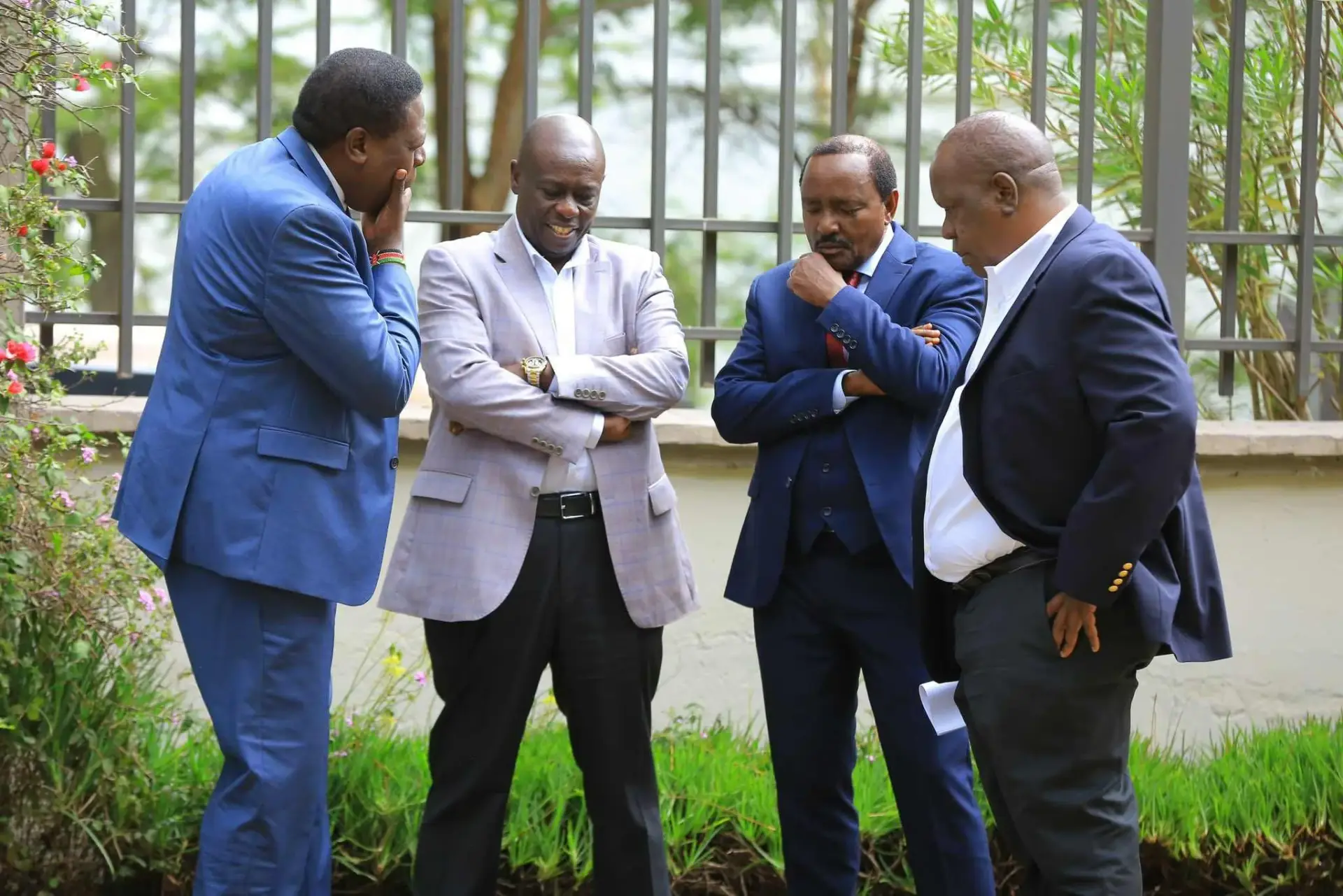
United Opposition leaders, from left, Eugene Wamalwa, Rigathi Gachagua, Kalonzo Musyoka, and Fred Matiang’i, after a meeting on June 2, 2026. (Photo: Kalonzo Musyoka/X)
As Kenya approaches the August 2027 General Election, the opposition faces a defining political test: whether its leaders can overcome individual presidential ambitions, unite behind one candidate and present a credible alternative to the electorate before time runs out. The question of who carries the opposition’s presidential ticket is no longer merely a matter of political preference. It is a question of strategy, organisation and the ability of competing political interests to find common ground. Without a clear agreement, the opposition risks spending valuable campaign time managing internal rivalries instead of explaining its policies and engaging voters.
Kenya’s political landscape is characterised by competing interests, shifting alliances and leaders seeking to establish themselves as national figures. While political competition within the opposition is legitimate in a multiparty democracy, prolonged disagreements over presidential leadership can complicate efforts to build a common political platform. When several leaders pursue the same position without an agreed mechanism for resolving their differences, negotiations can become increasingly difficult, leaving supporters uncertain about the coalition’s direction and purpose.
The opposition therefore needs to recognise that unity requires more than joint press conferences, political rallies and declarations of cooperation. It requires concrete decisions, a shared programme and an agreed process for selecting one presidential candidate. Leaders must be willing to negotiate in good faith, acknowledge their differences and place the interests of the coalition above individual ambitions where compromises are necessary. Such an arrangement would provide a clearer foundation for political mobilisation and public engagement ahead of the election.
The timing of the candidate announcement is particularly important. A presidential candidate requires sufficient time to introduce their agenda, engage communities across the country, build relationships with different political constituencies and communicate the coalition’s priorities. A candidate announced at the last minute may face a compressed campaign period, making it more difficult to establish a consistent national message and coordinate the structures necessary for an effective campaign. Although a late announcement does not automatically determine an election’s outcome, it can create avoidable organisational challenges.
The opposition must also understand that uncertainty over its presidential ticket can affect public confidence in its ability to work together. Voters assessing a potential government need to understand not only who seeks the presidency, but also what the coalition intends to achieve and how it proposes to govern. When political leaders remain occupied with negotiations over positions, policy discussions can take a back seat. This leaves important questions about the economy, employment, healthcare, education, public debt and the cost of living insufficiently addressed in the public debate.
Kenya’s political history offers a useful example of what cooperation can achieve, although historical circumstances should not be confused with guarantees of future success. In the 2002 General Election, opposition parties united under the National Rainbow Coalition, which presented Mwai Kibaki as its presidential candidate. The coalition defeated KANU’s Uhuru Kenyatta, ending KANU’s long period in power. The experience demonstrated that political parties with different interests can negotiate a common platform and organise around one candidate. However, the political conditions of 2002 differ from those of 2027, meaning the lesson lies in the value of coordination rather than any certainty about electoral results.
For the current opposition, the process of selecting a candidate must be transparent and credible. Leaders should agree on the criteria for determining who carries the presidential ticket, taking into account public support, leadership experience, policy compatibility, integrity and the ability to build a broad national coalition. The method of selection should be agreed upon before the final decision to reduce the risk of disagreements emerging after the candidate is announced. Those who do not secure the ticket must also decide whether they are prepared to support the collective agreement rather than establish competing campaigns.
Beyond selecting one candidate, opposition leaders must develop a common manifesto that addresses the concerns of ordinary Kenyans. Unity built exclusively around opposition to the sitting government may struggle to sustain public confidence unless it is accompanied by practical proposals. The coalition needs to explain how it intends to address economic pressures, create employment opportunities, strengthen public services, tackle corruption and protect constitutional institutions. It must also demonstrate how its promises would be implemented and financed. A shared policy programme would help voters evaluate the coalition on its ideas and proposed solutions rather than personalities alone.
Negotiations over the running mate, coalition leadership and the distribution of responsibilities also require careful management. These issues can create friction when participating parties feel excluded or believe their contributions are being overlooked. A written coalition agreement, clear decision-making procedures and an agreed mechanism for resolving disputes would help establish trust. Such arrangements should serve the public interest rather than become instruments for distributing political positions among a small circle of leaders.
Ultimately, the opposition must balance inclusive negotiations with a clear timetable. Every participating party deserves a fair opportunity to contribute, but discussions cannot continue indefinitely without decisions. The closer the election approaches, the more difficult it becomes to devote sufficient attention to policy development, grassroots organisation and public engagement while resolving internal disputes.
The 2027 contest presents the opposition with an opportunity to demonstrate whether political differences can be managed through negotiation and a shared national agenda. Agreeing on one presidential candidate early would not guarantee victory, but it would provide greater time for coordination, policy communication and public scrutiny of the proposed leadership. The responsibility now lies with opposition leaders to move beyond declarations of unity and establish a credible agreement. Ultimately, Kenyans will judge the opposition not only by the candidate it presents, but also by the quality of its ideas, the seriousness of its commitments and its ability to demonstrate that cooperation can translate into responsible leadership.
By Brian Keraa

United Opposition leaders, from left, Eugene Wamalwa, Rigathi Gachagua, Kalonzo Musyoka, and Fred Matiang’i, after a meeting on June 2, 2026. (Photo: Kalonzo Musyoka/X)
As Kenya approaches the August 2027 General Election, the opposition faces a defining political test: whether its leaders can overcome individual presidential ambitions, unite behind one candidate and present a credible alternative to the electorate before time runs out. The question of who carries the opposition’s presidential ticket is no longer merely a matter of political preference. It is a question of strategy, organisation and the ability of competing political interests to find common ground. Without a clear agreement, the opposition risks spending valuable campaign time managing internal rivalries instead of explaining its policies and engaging voters.
Kenya’s political landscape is characterised by competing interests, shifting alliances and leaders seeking to establish themselves as national figures. While political competition within the opposition is legitimate in a multiparty democracy, prolonged disagreements over presidential leadership can complicate efforts to build a common political platform. When several leaders pursue the same position without an agreed mechanism for resolving their differences, negotiations can become increasingly difficult, leaving supporters uncertain about the coalition’s direction and purpose.
The opposition therefore needs to recognise that unity requires more than joint press conferences, political rallies and declarations of cooperation. It requires concrete decisions, a shared programme and an agreed process for selecting one presidential candidate. Leaders must be willing to negotiate in good faith, acknowledge their differences and place the interests of the coalition above individual ambitions where compromises are necessary. Such an arrangement would provide a clearer foundation for political mobilisation and public engagement ahead of the election.
The timing of the candidate announcement is particularly important. A presidential candidate requires sufficient time to introduce their agenda, engage communities across the country, build relationships with different political constituencies and communicate the coalition’s priorities. A candidate announced at the last minute may face a compressed campaign period, making it more difficult to establish a consistent national message and coordinate the structures necessary for an effective campaign. Although a late announcement does not automatically determine an election’s outcome, it can create avoidable organisational challenges.
The opposition must also understand that uncertainty over its presidential ticket can affect public confidence in its ability to work together. Voters assessing a potential government need to understand not only who seeks the presidency, but also what the coalition intends to achieve and how it proposes to govern. When political leaders remain occupied with negotiations over positions, policy discussions can take a back seat. This leaves important questions about the economy, employment, healthcare, education, public debt and the cost of living insufficiently addressed in the public debate.
Kenya’s political history offers a useful example of what cooperation can achieve, although historical circumstances should not be confused with guarantees of future success. In the 2002 General Election, opposition parties united under the National Rainbow Coalition, which presented Mwai Kibaki as its presidential candidate. The coalition defeated KANU’s Uhuru Kenyatta, ending KANU’s long period in power. The experience demonstrated that political parties with different interests can negotiate a common platform and organise around one candidate. However, the political conditions of 2002 differ from those of 2027, meaning the lesson lies in the value of coordination rather than any certainty about electoral results.
For the current opposition, the process of selecting a candidate must be transparent and credible. Leaders should agree on the criteria for determining who carries the presidential ticket, taking into account public support, leadership experience, policy compatibility, integrity and the ability to build a broad national coalition. The method of selection should be agreed upon before the final decision to reduce the risk of disagreements emerging after the candidate is announced. Those who do not secure the ticket must also decide whether they are prepared to support the collective agreement rather than establish competing campaigns.
Beyond selecting one candidate, opposition leaders must develop a common manifesto that addresses the concerns of ordinary Kenyans. Unity built exclusively around opposition to the sitting government may struggle to sustain public confidence unless it is accompanied by practical proposals. The coalition needs to explain how it intends to address economic pressures, create employment opportunities, strengthen public services, tackle corruption and protect constitutional institutions. It must also demonstrate how its promises would be implemented and financed. A shared policy programme would help voters evaluate the coalition on its ideas and proposed solutions rather than personalities alone.
Negotiations over the running mate, coalition leadership and the distribution of responsibilities also require careful management. These issues can create friction when participating parties feel excluded or believe their contributions are being overlooked. A written coalition agreement, clear decision-making procedures and an agreed mechanism for resolving disputes would help establish trust. Such arrangements should serve the public interest rather than become instruments for distributing political positions among a small circle of leaders.
Ultimately, the opposition must balance inclusive negotiations with a clear timetable. Every participating party deserves a fair opportunity to contribute, but discussions cannot continue indefinitely without decisions. The closer the election approaches, the more difficult it becomes to devote sufficient attention to policy development, grassroots organisation and public engagement while resolving internal disputes.
The 2027 contest presents the opposition with an opportunity to demonstrate whether political differences can be managed through negotiation and a shared national agenda. Agreeing on one presidential candidate early would not guarantee victory, but it would provide greater time for coordination, policy communication and public scrutiny of the proposed leadership. The responsibility now lies with opposition leaders to move beyond declarations of unity and establish a credible agreement. Ultimately, Kenyans will judge the opposition not only by the candidate it presents, but also by the quality of its ideas, the seriousness of its commitments and its ability to demonstrate that cooperation can translate into responsible leadership.
By Brian Keraa