

The political temperature across Kenya rose sharply over the past week as President William Ruto and opposition leaders traded pointed barbs during rival regional tours, high-level coalition talks, and grassroots mobilisation drives nine months ahead of the August 2027 General Election.
Ruto Fires Back at Uhuru Kenyatta in Kisii
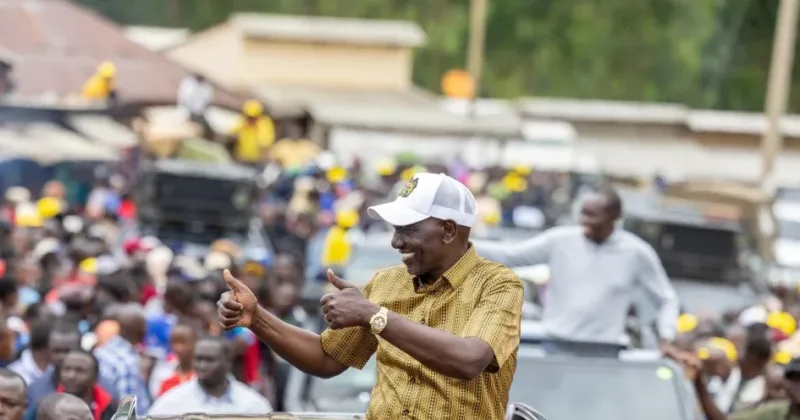
Concluding a four-day development tour of the Gusii region at a rally in Kisii Town on Wednesday, November 11, 2026, President William Ruto directly answered recent remarks by his predecessor, former President Uhuru Kenyatta, who had suggested that ordinary Kenyans had already made up their minds about changing leadership at the next ballot.
Addressing supporters at the Kisii Agricultural Institute Grounds, Ruto dismissed Kenyatta’s assessment and urged the retired Head of State to take advice from sober, working Kenyans—such as farmers, teachers, and doctors—rather than political brokers. The President also downplayed opposition celebrations over recent by-election victories, asserting that the United Democratic Alliance (UDA) and its partners in the broad-based arrangement remain firmly focused on delivering development projects nationwide. [1, 2]
Opposition Seeks Truce Amid Candidate Selection Tensions
Even as opposition principals unite in criticizing the government, internal disagreements over how to pick a single presidential flagbearer continue to test their cohesion. Over the weekend of November 7–8, 2026, Wiper Patriotic Front leader Kalonzo Musyoka brokered a consultative truce meeting in Karen, Nairobi, bringing together Democracy for Citizens Party (DCP) leader Rigathi Gachagua and Jubilee Party leader Dr. Fred Matiang’i. [1, 2, 3]
While the trio projected a public front of unity to end days of open friction between allies of Gachagua and Matiang’i, negotiations over regional arithmetic and a joint nomination formula remain unresolved. Days later in Kisii, President Ruto ridiculed opposition claims of commanding millions of guaranteed votes, challenging his rivals to a direct contest at the ballot box and declaring that he intends to send the current crop of opposition leaders into political retirement alongside him when his second constitutional term ends in 2032. [1, 2, 3, 4]
State House Strategy and Mixed Polling Signals
On Friday, November 13, President Ruto shifted his focus back to the capital, hosting approximately 1,500 UDA and Orange Democratic Movement (ODM) leaders and grassroots delegates at State House, Nairobi. Following the engagement, the President announced plans to fast-track priority Nairobi development initiatives—including affordable housing, modern markets, road upgrades, drainage works, and water and sanitation improvements—as part of a coordinated UDA–ODM campaign framework for Nairobi City County. [1, 2, 3]
Meanwhile, fresh public opinion data released this month underscores a fluid and contested electorate:
- Broad-Based Government Sentiment: A national survey published on November 12, 2026, by Trends and Insights for Africa (TIFA) reported that 43 percent of respondents opposed the UDA–ODM broad-based political arrangement, while 32 percent expressed support for it. [1]
- Presidential Preference: The same TIFA Research survey, conducted between October 26 and November 5, placed President Ruto and Nairobi Senator Edwin Sifuna tied at 31 percent as most preferred 2027 presidential candidates, ahead of Kalonzo Musyoka (9 percent), Fred Matiang’i (5 percent), and Rigathi Gachagua (4 percent), with 15 percent undecided—findings that both government allies and opposition leaders have publicly disputed. [1, 2, 3, 4]
While opposition figures insist they possess the grassroots numbers and public dissatisfaction needed to unseat the administration, the government maintains that its ongoing infrastructure, housing, and agricultural programmes will carry the day when Kenyans cast their ballots in August 2027.