


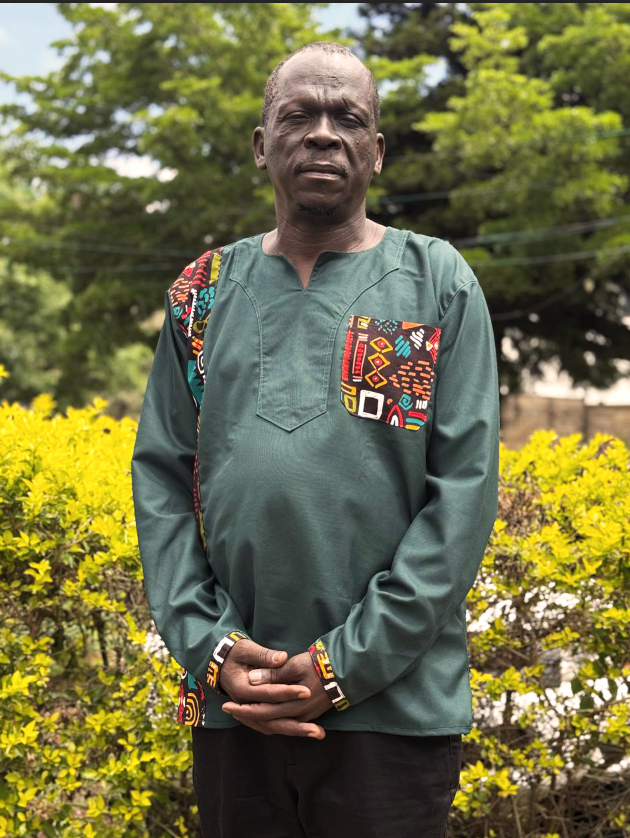
By Nyachae Brian.
There is something interesting about African political culture that deserves serious attention. It is the place occupied by rumours, secrets and conspiracies in our understanding of government and political processes. In Kenya, people often talk about “siri kali”, a phrase that captures the deep suspicion with which citizens approach the operations of the State.
“We have lived through regimes whose decisions were made behind closed doors, leaving citizens to depend on whispers and speculation to understand what was happening. Consequently, many Kenyans have developed a political antenna that searches for information beyond official statements.” Claims Wafula Buke who say that Kenyans must now be able to differentiate what rumours is from deep fake and what propaganda looks like.
This is not necessarily a healthy situation, but it is a reality we cannot ignore. In our political environment, rumours sometimes provide the first indication of developments that later become public knowledge. The challenge is knowing which rumours deserve attention and which should be dismissed as deliberate misinformation.
I have always maintained that we must not believe every rumour we hear. Equally, we should not dismiss everything simply because it has not been officially documented. The responsibility is to investigate, establish the facts and understand the possible implications.
This brings me to the rumours surrounding opposition leader Kalonzo Musyoka and alleged meetings with President William Ruto.
“Where secrecy thrive, suspicions grows. Where institutions are transparent and accountable, rumours lose some of their power. “adds Buke.
Kalonzo has denied claims that he has held secret political negotiations with the President. His party has also dismissed circulating claims and videos suggesting that he is preparing to abandon the opposition.
These allegations must be treated with caution. A political meeting, even when it takes place, does not automatically amount to a political deal. Leaders meet for many reasons, including consultations, negotiations and matters of national interest.
However, politics is not conducted in a vacuum. The credibility of a politician is shaped by his history, public conduct and the perceptions that people have formed over time.
Kalonzo has carried the nickname “watermelon” for years. It emerged from the perception that his political position could be different from what appeared on the surface. Whether that label is fair or not, it has become part of his political history.
When a new rumour emerges, people inevitably revisit that history. They ask themselves whether the allegation is consistent with what they already know about the politician.
This is the difficulty Kalonzo faces. Even when an allegation is unproven, his political past makes it easier for some people to believe it. That is the danger of a credibility deficit: it can make a politician vulnerable to accusations that might otherwise be dismissed.
The consequences extend beyond the individual. They affect the opposition’s ability to build trust and maintain unity.
Suppose Kalonzo is eventually chosen as the opposition’s presidential candidate. His colleagues would have to campaign alongside him and supporters would have to believe that he is committed to the political cause.
If doubts about his loyalty persist, the coalition could struggle to mobilise its supporters. Some voters may become discouraged, while others may question whether the opposition is serious about challenging the government.
A political coalition cannot win an election merely by bringing together prominent leaders. It must also establish confidence among its supporters that its members share a common purpose.
This is why the question of the opposition’s presidential candidate is so important. The choice must be based on a credible process that considers the ability of each candidate to mobilise voters, unite the coalition and inspire confidence.
There is also a lesson for Rigathi Gachagua and other opposition leaders. Political statements made in public can create expectations and suspicions that are difficult to control.
When Gachagua suggested that a leader who fails to secure the opposition ticket might abandon the coalition, many people immediately turned their attention to Kalonzo. That reaction tells us something about the perceptions surrounding him, but it does not prove that he intends to leave.
We must distinguish between political interpretation and established fact.
The same caution applies to rumours about meetings abroad, alleged financial transactions and claims of secret political arrangements. Such claims can have serious consequences for the individuals involved and for the country’s political stability. They should not be repeated as facts without credible evidence.
Rumours have influenced political history in many parts of the world. They can trigger conflicts, undermine governments and alter the course of elections. Kenya is not immune to these dangers.
Indeed, the growing influence of social media has made the problem more serious. A fabricated video, an old photograph or a misleading statement can circulate widely before anyone establishes its authenticity.
We therefore need credible institutions that can independently investigate politically significant rumours. Universities, research organisations and professional fact-checking institutions have an important role to play.
Opinion polls also require greater transparency. Their methodology, sample size, funding and limitations should be clearly disclosed so that citizens can assess their credibility.
The media must be equally careful. Our responsibility is not to amplify every rumour that attracts public attention. It is to verify information, seek responses from those affected and provide context that helps citizens understand the issues.
Ultimately, rumours reveal something about the relationship between citizens and the State. Where secrecy thrives, suspicion grows. Where institutions are transparent and accountable, rumours lose some of their power.
“Kenya must move beyond a political culture in which citizens are forced to depend on whispers to understand their government. “add Prof. Herman Manyora.
We need facts, credible institutions and leaders whose conduct inspires confidence.
Until then, rumours will continue to shape our politics. But we must never allow them to become a substitute for the truth.